

Complete Healthcare Team
For years, the standard advice before an IUD insertion was to take some ibuprofen and expect a pinch. If that undersold your experience or a friend’s, you weren’t imagining it. In 2024, the CDC updated its guidance specifically because patients spoke up about pain that wasn’t being taken seriously, and the recommendations now push providers to actually talk through pain management options. That shift is worth understanding before you go in, because it means you have more say in the process than you may realize.
Knowing what actually happens during insertion and removal, and what your options are for comfort, takes a lot of the fear out of it. The family planning team at Complete Healthcare walks patients through this regularly, and this guide covers the procedure step by step, the honest truth about pain, how removal works, and what to know about strings and bleeding afterward.
What Happens During IUD Insertion
The insertion itself is quick, usually just a few minutes, though the appointment runs longer. Here’s the general sequence:
- You lie back on the exam table, similar to a pelvic exam, and the provider inserts a speculum to see the cervix.
- The provider cleans the cervix and checks the position and depth of your uterus.
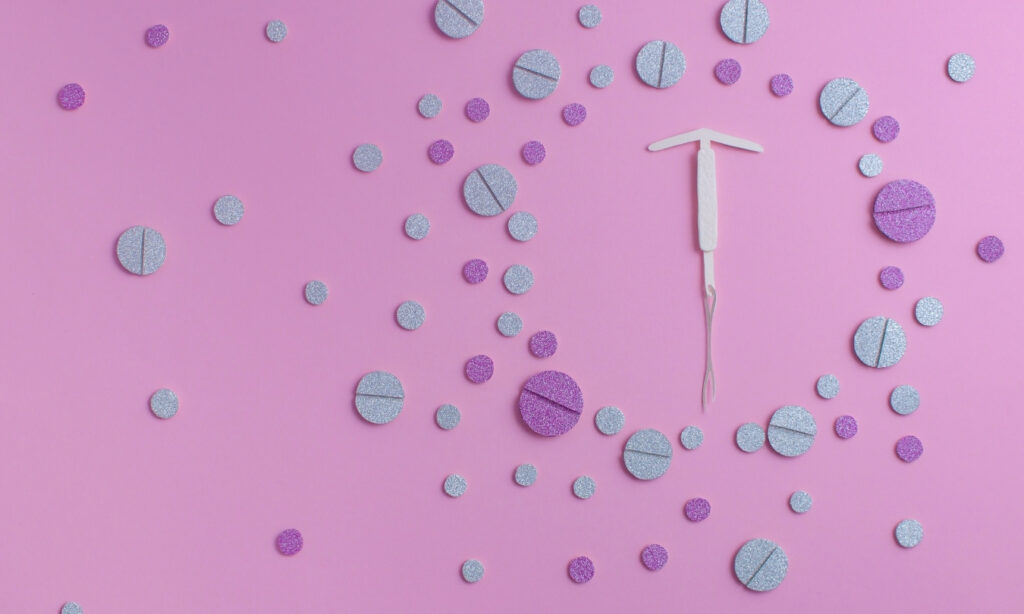
- Using a thin applicator, the provider passes the IUD through the cervical opening and into the uterus, where the arms open into the T shape.
- The provider trims the two strings, leaving a short length in the upper vagina.
The part people feel most is when the cervix is held steady and when the device passes through it. That’s the source of the cramping, and it’s brief.
The Honest Truth About IUD Insertion Pain
Pain during IUD insertion is real, it varies a lot from person to person, and you deserve a straight answer about it. Some people feel mild cramping. Others experience sharp pain, usually lasting seconds during the actual placement. Factors like a tighter or more sensitive cervix, a tilted uterus, whether you’ve given birth vaginally, and anxiety can all influence the experience.
The CDC’s 2024 guidance recommends that providers counsel patients on pain options and identifies lidocaine, a local anesthetic, as potentially useful. It can be applied as a gel, spray, or cream, or given as an injection near the cervix called a paracervical block. Notably, the same body of evidence found that over-the-counter painkillers like ibuprofen, long the default suggestion, are largely ineffective at preventing insertion pain, though they can help with cramping afterward. The guidance also recommends against misoprostol for routine use, since it doesn’t reliably help and can cause its own cramping.
The practical takeaway: ask about lidocaine and any other comfort options before your appointment, and tell your provider if you’re anxious or have had painful pelvic procedures before. In our practice, we’d much rather build a comfort plan with you upfront than have you white-knuckle through it. Your pain is real, and managing it is a legitimate part of the visit, not an add-on.
What Recovery From Insertion Looks Like
Cramping and spotting for a few days to a few weeks is normal as your body adjusts. Some people feel lightheaded right after placement, so it’s worth having a calm rest of your day and, ideally, a ride if you can arrange one. Over-the-counter anti-inflammatories and a heating pad help with the cramping. Irregular spotting in the first three to six months is common, especially with hormonal IUDs, and usually settles over time.
How IUD Removal Works
Removal is the part people worry about unnecessarily, because it’s typically much easier and faster than insertion. The provider inserts a speculum, uses an instrument to gently grasp the strings, and pulls slowly. The IUD’s flexible arms fold upward as it passes through the cervix, and it’s out in a matter of seconds.
Most people feel a brief cramp during removal and nothing more. If you want to stop birth control, replace an expired IUD, or switch methods, removal can usually be done at a routine visit. If you’re replacing it, a new one can often be placed in the same appointment. One point worth knowing: if you’re having an IUD removed and don’t want to become pregnant, avoid unprotected sex in the week beforehand, since sperm can survive several days and fertility returns quickly after removal.
Understanding Your IUD Strings
The two thin strings that extend from the IUD into the upper vagina serve a purpose. They let your provider confirm the IUD is in place, and they’re what’s used to remove it later.
Some providers show you how to check your strings by reaching a clean finger high into the vagina to feel for them near the cervix. You shouldn’t tug on them. The point is simply to confirm they’re there, which suggests the IUD is positioned correctly. Over time strings can soften or curl up around the cervix, so not feeling them doesn’t automatically mean something is wrong, but it’s worth mentioning to your provider. During sex, a partner generally won’t feel the strings, and if they’re bothersome, a provider can often trim them.
Common Questions About the IUD Procedure
Is bleeding or spotting after sex normal with an IUD?
Some light spotting after sex can happen, especially in the first several months after insertion while your body adjusts, and it’s often not a cause for concern on its own. That said, bleeding after sex can also have other causes unrelated to the IUD, so persistent, heavy, or new bleeding after sex is worth having checked. If it comes with pain, unusual discharge, or fever, contact your provider. We’d rather take a look than have you wonder.
How do I know if my IUD has moved?
IUD expulsion or displacement is uncommon but possible, most often in the first few months. Signs worth checking include not being able to feel your strings when you previously could, feeling the hard plastic of the device itself at your cervix, new or worsening pain, unusual bleeding, or a partner suddenly feeling the device during sex. If any of these happen, use backup contraception and contact your provider, since a displaced IUD may not prevent pregnancy reliably.
Can I get an IUD placed or removed while on my period?
Yes, and insertion is sometimes even a little easier during your period because the cervix is naturally slightly more open, though it can be done at any point in your cycle. Removal can also happen anytime. If anything, having your period is not a barrier to either procedure, so there’s no need to reschedule around it unless your provider advises otherwise.
Who Might Want Extra Preparation
Some situations are worth flagging to your provider ahead of time so they can plan for your comfort:
- People who have never given birth or had a vaginal delivery, who sometimes experience more discomfort during insertion
- People with a history of painful pelvic exams or procedures, who may benefit from lidocaine or other comfort measures
- People with significant anxiety about the procedure, since anxiety genuinely affects the experience and can be planned for
- People who have had an IUD expelled before, which slightly raises the chance of it happening again
A Note on Advocating for Yourself
The biggest shift in IUD care recently is the recognition that patient pain deserves to be taken seriously. You are allowed to ask what pain management your provider offers, to request lidocaine, to ask questions during the procedure, and to speak up if something hurts. A good provider welcomes this. If you’ve been putting off an IUD because of stories you’ve heard, knowing you can shape the experience often makes the difference.
Talk Through Your Options
If you’re considering an IUD, due for a removal or replacement, or have questions about strings or bleeding, a provider can walk you through what to expect and build a comfort plan that fits you. Complete Healthcare offers family planning care with same-day appointments available across our 11 locations in Central Ohio, including Columbus, Pickerington, Newark, Lancaster, Marion, Marysville, and Delaware. Call us at 614-882-4343 or schedule online to get started.
