

Complete Healthcare Team
Cramps are supposed to ease up once your period is over, so when they show up a few days after the bleeding stops, it’s reasonable to wonder what’s going on. People often call this “post-menstrual syndrome,” and while that’s a useful shorthand, it’s worth knowing up front that it isn’t an official medical diagnosis the way PMS is. It’s a catch-all term for cramping and discomfort that lingers or returns after a period ends, and the real value is in figuring out what’s actually behind it.
The reassuring news is that mild cramps after a period are often harmless and tied to normal cycle events like ovulation. The part worth paying attention to is when the pain is persistent, worsening, or paired with other symptoms, because that can point to a treatable underlying condition. The gynecology team at Complete Healthcare evaluates post-period cramping regularly, and this guide covers what the term really means, why it happens, what helps, and when it’s worth getting checked.
What “Post-Menstrual Syndrome” Actually Means
Unlike premenstrual syndrome (PMS), which is a recognized cluster of symptoms before a period, “post-menstrual syndrome” isn’t a formal clinical term. People use it to describe physical symptoms, usually cramping, and sometimes mood changes, that occur in the days after menstruation ends rather than before it begins.
Because it isn’t a single diagnosis, the useful question isn’t “do I have post-menstrual syndrome?” it’s “what’s causing cramps after my period?” Those are two different things, and the cause is what actually determines whether this is nothing to worry about or something worth treating.
Why You Might Be Cramping After Your Period
Post-period cramps have a range of possible causes, from completely normal to worth investigating. The most common explanations include:
- Ovulation. This is one of the most frequent and benign reasons. About halfway through your cycle, which can fall not long after a period ends, releasing an egg can cause a brief, one-sided cramp known as mittelschmerz. It typically lasts anywhere from a few minutes to a couple of days and resolves on its own.
- Ovarian cysts. Fluid-filled sacs on the ovary can cause cramping along with bloating or a heavy feeling in the pelvis. Most are harmless and clear up without treatment.
- Endometriosis. This is a leading medical cause of cramping outside the usual window. It happens when tissue similar to the uterine lining grows elsewhere in the pelvis, and the pain often worsens over time. According to the World Health Organization, endometriosis affects an estimated 10 percent, or roughly 190 million, reproductive-age women worldwide, so it’s far from rare.
- Adenomyosis. Here, endometrial-like tissue grows into the muscular wall of the uterus, which can cause heavy bleeding and prolonged cramping that extends past the period itself.
- Uterine fibroids. These noncancerous growths in or on the uterus can cause pelvic pressure, longer or heavier periods, and cramping.
- Pelvic inflammatory disease (PID). An infection of the reproductive organs can cause cramp-like pain, often with abnormal discharge, fever, or pain during sex or urination. PID needs prompt treatment, since it can cause lasting damage if left untreated.
Two less common possibilities are worth a quick mention because the stakes are higher. Light cramping with spotting around the time a period would be due can sometimes signal early pregnancy. And severe one-sided pain with abnormal bleeding, shoulder pain, or faintness can indicate an ectopic pregnancy, which is a medical emergency. In our practice, we’d always rather someone get sudden severe pelvic pain evaluated than wait it out.
What Helps with Cramps After Your Period
For the everyday, lower-grade cramping that isn’t a sign of something more serious, the relief measures are much the same as for regular period cramps, and they work for the same reason, by easing muscle tension and calming inflammation:
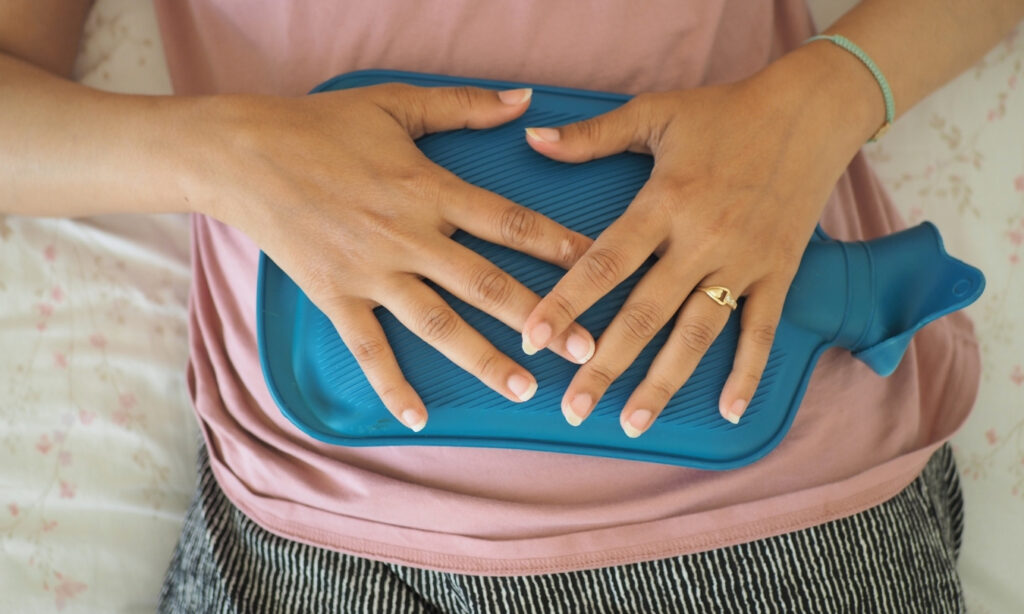
- A heating pad on your lower abdomen or back helps relax cramping muscles and is a reliable, drug-free option.
- Over-the-counter anti-inflammatories like ibuprofen or naproxen target the prostaglandins that drive cramping, which is why they tend to work better than acetaminophen for this kind of pain. Follow the dosing instructions and check with a provider first if you have conditions like ulcers, asthma, or kidney issues.
- Gentle movement, hydration, and stress reduction can all take the edge off.
If cramps keep returning after your period and these measures aren’t enough, that’s a signal the cause is worth identifying rather than just managing month after month. Treatment for the underlying condition, whether that’s endometriosis, fibroids, or something else, is what actually resolves the pattern, and the right approach depends entirely on the diagnosis.
Common Questions About Cramps After a Period
Is it normal to have cramps after your period ends?
Mild, occasional cramping after a period is common and often tied to ovulation or other benign causes, so on its own it’s usually not a reason for alarm. What’s less typical is cramping that’s severe, lasts well beyond a day or two, keeps happening every cycle, or comes with other symptoms like heavy bleeding or pain during sex. That pattern is worth a conversation with a provider.
How long should cramps after a period last?
There’s no single “normal,” but benign post-period cramps, like those from ovulation, usually last from a few minutes to a couple of days and then fade. Cramping that stretches on for several days, recurs consistently, or intensifies over time is more likely to have an underlying cause that’s worth evaluating. Tracking when the cramps start and how long they last gives your provider a much clearer picture.
Could cramps after my period mean something serious?
Most of the time, no. But because conditions like endometriosis, adenomyosis, fibroids, and PID can all cause post-period cramping, persistent or worsening pain shouldn’t be dismissed as just part of having a cycle. These are treatable, and catching them earlier generally makes them easier to manage. We’d rather help you rule something out than have you quietly live with pain that has a fixable cause.
When Cramps After Your Period Warrant a Visit
A few situations are worth a prompt appointment rather than waiting and watching: cramps that are severe or steadily worsening, pain that interferes with daily life, cramping paired with heavy or irregular bleeding, pain during or after sex, or any cramping that comes with fever or unusual discharge. And sudden, severe pelvic pain, especially with dizziness or faintness, is a reason to be seen right away.
Let’s Figure Out What’s Behind Your Cramps
Cramping after your period ends is common, often harmless, and very treatable when it isn’t, but you shouldn’t have to guess at what’s causing it or simply push through pain every month. If post-period cramps are a recurring problem, we can help identify the cause and find an approach that works for you. Complete Healthcare offers gynecology care with same-day appointments available across our 11 locations in Central Ohio, including Columbus, Pickerington, Newark, Lancaster, Marion, Marysville, and Delaware. Call us at 614-882-4343 or schedule online to get started.
